Molecular, Inorganic/Organic Model
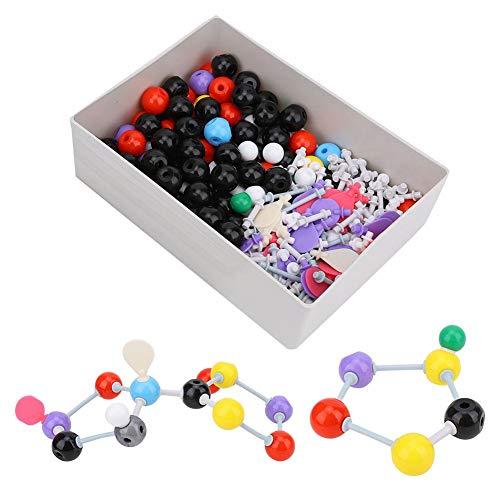
Product Code : JL-LEP-10343
The Molecular, Inorganic/Organic Model (SKU JL-LEP-10343) is a ball-and-stick molecular model set for building inorganic and organic compounds in chemistry lessons. Its 126 atoms, 30 orbitals and 150 links let students assemble molecules, show covalent and ionic bonding and work out polarity from structure. It is used in secondary-school chemistry and first-year college practicals, and JaincoLab manufactures it in India for schools and colleges.
Specifications
The molecular model set uses solid polypropylene spheres, 17 mm for hydrogen and chlorine and 23 mm for other atoms, joined by flexible low-density polyethylene links in three lengths: 11 mm short links for space-filling, 27 mm rigid single-bond links and 43 mm flexible double or triple-bond links.
| Product | Molecular, Inorganic/Organic Model |
| SKU | JL-LEP-10343 |
| Purpose | Represents inorganic and organic molecular structures, assembles compounds to show covalent and ionic bonding, and lets students determine polarity from structure |
| Model type | Ball and stick |
| Atom parts | Solid spheres |
| Sphere material | Polypropylene |
| Sphere diameter | Hydrogen and chlorine atoms 17 mm; other atoms 23 mm |
| Link material | Flexible low-density polyethylene (LDPE) solid links |
| Short links | For space filling; 11 mm; translucent/white |
| Medium links | Single, rigid; 27 mm; grey |
| Long links | Double/triple, flexible; 43 mm; grey |
| Set contents | 126 atoms, 30 orbitals, 150 links and 1 short link remover tool |
| Specification reference | As per DepEd guidelines |
Applications of the molecular model set
The molecular model set is used whenever students need to turn a formula into a three-dimensional structure: building simple inorganic compounds and organic molecules, comparing covalent and ionic bonding, and predicting polarity from the shape of the molecule.
- Building simple inorganic compounds such as water, ammonia and carbon dioxide to show covalent bonding
- Assembling hydrocarbons, alcohols and other organic molecules, including isomers with the same formula
- Showing double and triple bonds with the flexible long links
- Deciding whether a molecule is polar from its three-dimensional structure
- Practical and revision work in senior secondary chemistry and B.Sc. organic chemistry
Scope of supply and ordering
The listing covers one set of 126 atoms, 30 orbitals, 150 links and a short link remover tool, as given in the specification table. Accessories, spares and quantities are confirmed on the quotation.
Every quotation for this set states the minimum order quantity, lead time and packing, calculated for the number of sets and the delivery destination. Single chemistry laboratories, school groups, colleges and export buyers in Africa, the Middle East and South and South-East Asia are supplied.
Frequently asked questions
What is included in the molecular model set?
The set contains 126 atoms, 30 orbitals, 150 links and one short link remover tool.
What sizes are the atom spheres?
Hydrogen and chlorine atoms are 17 mm in diameter and all other atoms are 23 mm, made of solid polypropylene.
Which link lengths are supplied?
Short 11 mm links for space-filling, rigid 27 mm links for single bonds and flexible 43 mm links for double and triple bonds.
Can it show both covalent and ionic bonding?
Yes. The set is designed to assemble compounds that show covalent and ionic bonding and to judge polarity from structure.
Related products
Chemistry teachers often combine the molecular model set with these models:
Further model sets are listed under chemistry lab equipment and in the Laboratory Equipment Products range of JaincoLab, a school lab equipment manufacturer in India.
Request a quote
To request a quotation for the Molecular, Inorganic/Organic Model, send the number of sets and the delivery destination through the JaincoLab contact page or email [email protected]. Institutions and contractors buying under a tender can also reach us via the tenders page.